Ayudar no es aburrido: Tablas de tareas e ideas para niños en edad preescolar
Chore charts for preschoolers accomplish many goals, including helping families spread the load of household tasks and giving…

Chore charts for preschoolers accomplish many goals, including helping families spread the load of household tasks and giving little ones a sense of responsibility. And the great news is that most preschoolers are ready to help with chores at home. Kids reap many benefits from completing age-appropriate chores tailored to their development. Plus, many preschool classrooms already function with little learners focusing on small tasks. Teachers will ask: Who is the line leader? Who is passing out markers? Is everyone doing their job during the cleanup song? Build on what your child is learning in the classroom by adding a simple chore list for preschoolers at home that teaches important life skills and boosts confidence.
How Chore Lists for Preschoolers and Chores Support Early Development
Small responsibilities offer big benefits for early childhood development. Whether it is in the classroom or at home, preschoolers are capable of being helpful–and they often enjoy it! Completing age-appropriate chores can help preschoolers improve their fine and gross motor skills and increase confidence. Fine motor skills allow us to do things like wipe a table, and gross motor skills help with things like running and jumping–all important skills at any age and especially for preschoolers who are mentally and physically growing every day.
Chores also foster social-emotional and sensory development. In our blog post, “Reflexiones para familias con niños en edad preescolar: ¿Está mi hijo preparado para el jardín de infancia?” we unpack how social-emotional and sensory development are key to equipping little learners for kindergarten. The Colorado Early Learning and Development Guidelines also provide detailed information on why building these skills matters for early childhood development. For example, the guidelines suggest that children ages 3 to 5 can begin to show satisfaction when completing a task, like a chore. Research highlighted by Cornell University found that children who completed chores in kindergarten showed improved social integration and academic performance.
From physical strength and coordination to confidence and self-esteem, chores offer preschoolers many benefits. Having your child help with chores might take more time and patience, but a multigenerational Harvard study spanning 85 years of 700 “high achievers” found “a strong connection between doing household chores and later professional success.”
Chore Charts and Lists for Preschoolers
Now that it’s clear that chores for preschoolers offer many benefits for children and their families, how do you get started? People have different ideas about how to approach chores, and this article from Today’s Parents stresses making chores less about rewards and more about intrinsic accomplishment. Our blog post about spring cleaning offers 8 tips for how to engage your preschooler in simple tasks, like chores, while accomplishing your goals. We suggest chores for preschoolers that focus on simple tasks, things that do not take much time, activities they can do with you or family members and chores that they show curiosity about. Do they wonder why plants need water or how to get fingerprints off of a window? Have them help you the next time you tackle either task and then teach them how to do it themselves.
Our chore chart ideas for preschoolers below offers as few tasks that work well, their benefits, and what they entail.
- Sorting laundry
- Help sort the laundry between colors and whites. This task can help with color recognition and counting.
- Find and get the correct amount of food for the family pet, and monitor water levels. This task demonstrates care for an animal and helps establish routines.
- Walk around the house and grab their belongings. To work on counting, encourage your child to keep a count of the items they find. Or challenge them to pick up more items than their sibling or you.
- Observing plants and watering them when needed. This can show the importance of caring for a living thing.
- Helping put groceries in the fridge or pantry where they can reach. This can help with organizational skills and learning the layout of the home.
- Set out utensils, napkins or plates. Help grab plates and utensils and clear the table after a meal This can help with a sense of responsibility and care for others.
- Standing by a family member doing dishes and helping dry them. This promotes working collaboratively and keeping the kitchen tidy.
- Whether they made the spill or not, it is beneficial for the child to learn how to clean up a mess, and react calmly when something is spilled.
- Putting pillowcases or sheets on. This can be a fun collaborative activity that fosters teamwork.
- Gathering up trash or recycling from receptacles around the house. While building a sense of responsibility, this can also help little ones improve their awareness about consumption and waste.
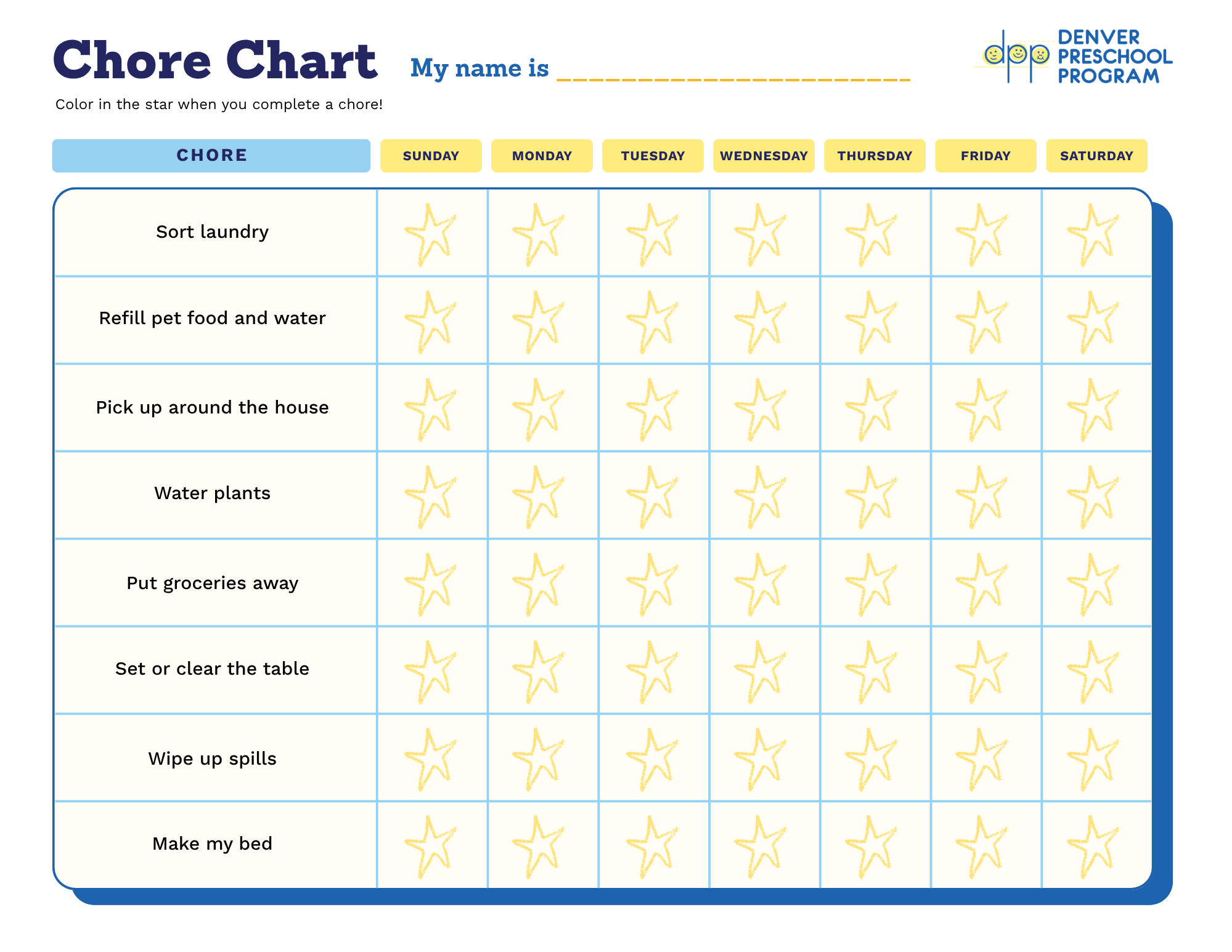
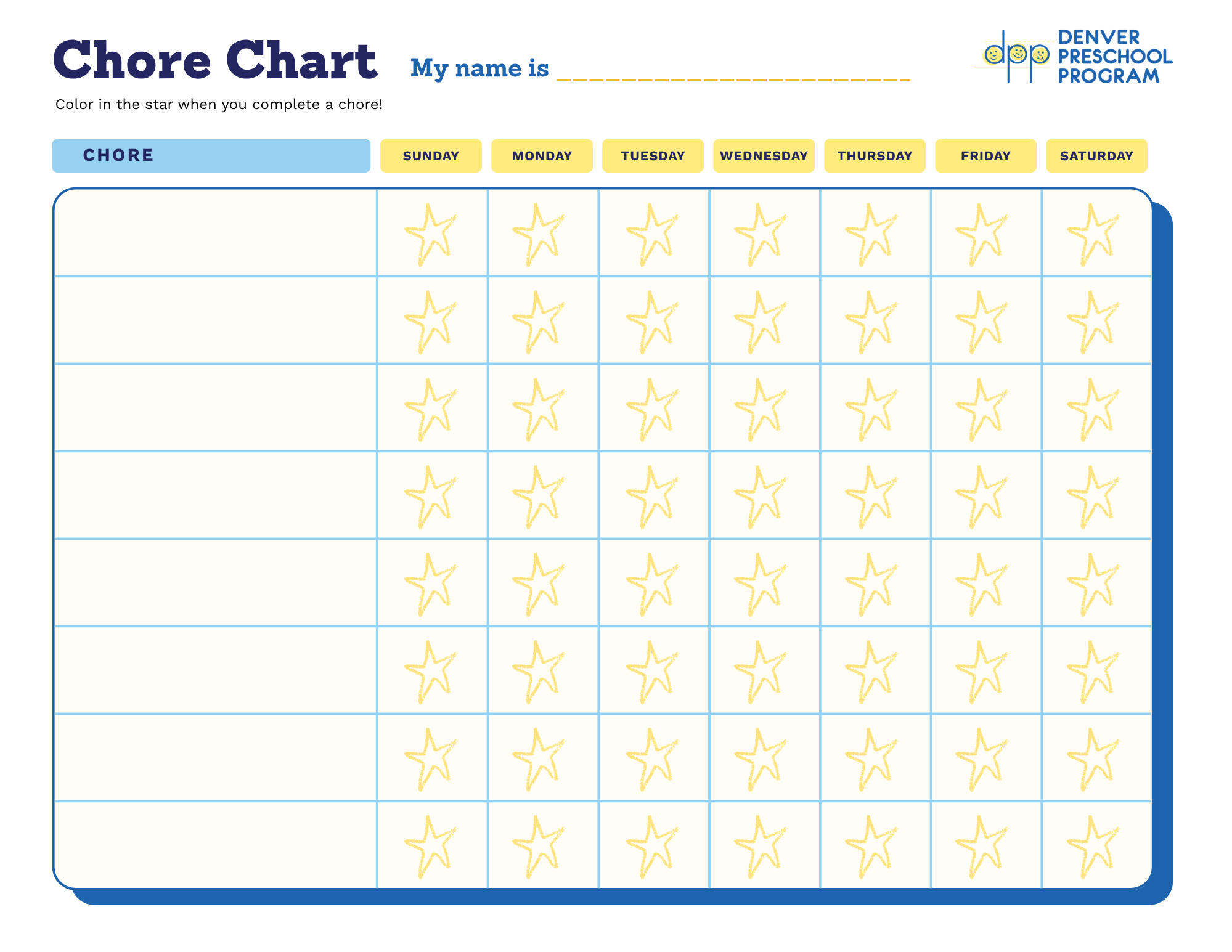
Download our fun chore charts for preschoolers that are customizable o pre-filled with our above suggestions.
Refer to The Child Development Institute y The American Academy of Child and Adolescent Psychiatry for more ideas to get children involved with more chores at home.
Be Flexible and Open-Minded with Chores
There’s no denying that having your little one help with chores might not be the most efficient. It is okay to allow the tasks to be done imperfectly (and try never to re-do the tasks, especially with your little one around). Patience is important, and what matters is that they are starting to try. Be clear with your expectations, and show your child what to do and how you’d like them to do it. And finally, make it fun! Sing while you put the dishes away, or make sorting laundry a game.
Looking for more ideas for family fun? Sign up for our bilingual (English and Spanish) monthly e-newsletter, Family Dispatch, for tips, resources and upcoming community events.