Da agitação ao relaxamento: ensinando crianças em idade pré-escolar sobre movimento.
Spend any amount of time with a preschooler and you will know that they use their bodies to…
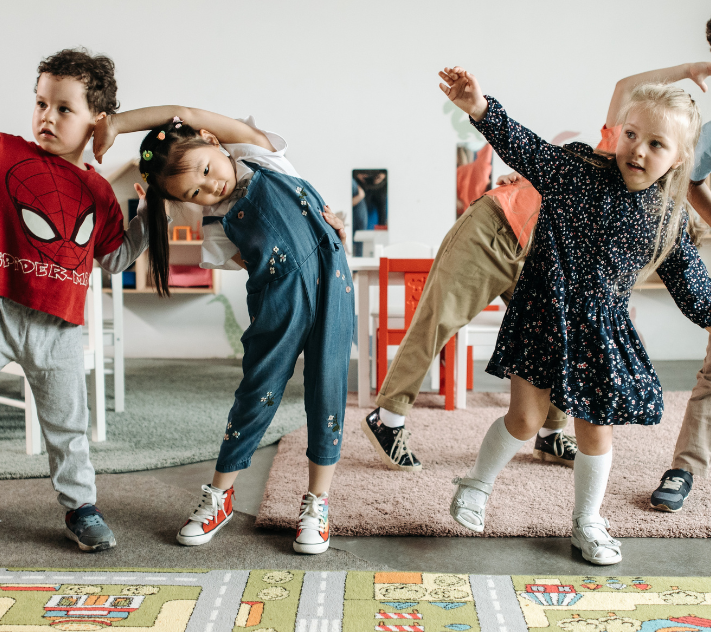
Spend any amount of time with a preschooler and you will know that they use their bodies to express themselves and send messages about how they are feeling. Whether wiggles, jumps or dancing, they seem to always be on the move. Helping kids understand how movement impacts their health is important. It’s also valuable for young kids to notice how their body feels and how movement can help them manage their energy and emotions. Keep reading to learn more about teaching preschoolers about movement.
Energy 101: Helping Little Kids Understand Movement
Before discussing types of energy–or movement–it is important to teach preschoolers about energy. Online videos like “What is Energy?” from Peekaboo Kids can help your child understand energy. Explaining the science behind energy can also be done using references your child is familiar with. Here are a few examples of helpful phrases:
- Energy is like your body’s battery, it can be charged up, just right or low.
- Energy is the power inside your body that lets you run, jump, learn or even sleep.
- If a car has a lot of energy, it might zoom around super fast. If it is low on energy, it might move slowly or stop.
- What kind of energy does a cheetah have? What about a turtle? A sloth? A monkey?
- Have your child show you how energy looks and feels using favorite stuffed animals or toys. Then you can start to ask, how does your body’s energy feel today?
Energetic Movement
Once kids begin to understand what energy is, you can start to discuss types of energy and how they can control or change their body’s energy. You can talk about how activity breaks can help their little bodies wind down, how getting enough sleep can prevent big drops in energy, and how bursts of movement can wake up their bodies and brains.
Start with noticing — The next time your child is moving with a lot of energy, try helping them notice how their body feels and what it needs in that moment. Building this awareness can help preschoolers understand their emotions, energy levels, and how movement affects their mood.
You might ask them, “Does it feel like your body wants to be big and fast? Does it feel like it just needs to wiggle and shake?” or “Is your body feeling excited, frustrated or full of energy?”
Then offer simple ways to get moving that can help release energy, including:
- Dance parties
- Tag or other race or freeze style games
- Walks or bike rides around the block
- Obstacle courses or physical challenges
- Jumping on the couch or bed (if this is allowed)
After the activity, check in again on how their body feels. You could ask “Does your body feel calmer now?” or “Is your body telling you that you need to slow down or take a break?”
Calming Movement
Helping a child slow down can be a bit more challenging than encouraging movement, but with a little fun (and patience!), you can make this a fun experience as well. Calming movements are helpful in guiding your child through emotional transitions like preparing for school or during moments your preschooler experiences anxiety, frustration or overstimulation when in a group or public setting.
Start with noticing — As you shift from fast to slow, from wiggly to calm, have your child tell you how their body feels. If there are certain times of day when calming movement may be necessary, like naptime or before bed, incorporate these movements into their routine to avoid energy spikes that can lead to a meltdown.
Talk with your child about how calming tools can help control emotions. Here are some exercises that may be helpful:
- Deep breathing or the “smell the rose, blow out the birthday candle” breathing exercise
- Gentle stretching or yoga
- Hugging stuffed animals or pillows
- Hugging or rocking with loved ones
After practicing, help your child notice how their body feels different. Ways that you may point this out is if their breathing has slowed or if their heartbeat feels calmer. These exercises can help your child recognize when they may be ready to rest or slow down for a moment..
Movement Resources For Preschool Children
From yoga to light stretching, dance parties to wake-up songs, our online resources can help you and your preschooler practice the power of movement. Use them to learn how energy can grow or slow down based on how their bodies move.
Energetic Movement
- GoNoodle.com: short energetic activities to get kids moving.
- Hello Body song from the Healthy Kids Project: An energetic song to start the day
- Boletim informativo da pré-escola universal do Colorado: Summer self-regulation tips
- Sesame Street Daily Movement Video: An introduction to movement with Elmo
Yoga + Stretching
- Cosmic Kids Yoga
- Moovlee: Online video library for stretching, breathing and movement
- YogaGuppy: Online video library of kids yoga
Calm + Regulation:
- Tonies for Calm: If you have a Tonie Box, there are countless options for calming characters. Tonie Box’s start at $129 and characters start around $19.99.
- Headspace for Kids: podcasts and stories from the Headspace App, starting at $12.99/month
- YouTube: Zones of Regulation Song
- Sesame Street Breathing Song
- Common Sense Media: Best Mindfulness Podcasts for Kids
Realizing that our bodies are sending messages through our physical energy, thoughts and feelings is a complex concept, and one that even adults have to work on. But practicing different movements with your preschooler helps build the language they need to help express emotions and feelings as they connect with friends, teachers and their community.
Learn more about helping your little one navigate their emotions in our blog post, Grandes Sentimentos para Crianças Pequenas: Atividades para Crianças em Idade Pré-Escolar Aprenderem Sobre Emoções.
Need ideas for how to get those little bodies moving around town this summer? Denver Preschool Program has you covered with local events, activities and ideas for your warm weather bucket list. For all of our tips and to-do’s, make sure to subscribe to our bilingual monthly newsletter, Family Dispatch.